
If your team does it a thousand times a month, AI can probably do it
Customer service that never sleeps
Agents that answer customers on WhatsApp, web or email around the clock, hand off to a human when needed and log everything.
Paperwork that processes itself
Invoices, orders, résumés, medical records: AI reads the document, extracts the data and puts it into your system with no manual data entry.
Decisions based on data, not gut feeling
Demand forecasts, lead prioritization, operational alerts: dashboards that tell you what is going to happen, not just what happened.
AI inside the software you already use
No need to switch systems: we connect AI to the tools you already use — your ERP, your CRM, your spreadsheets.
AI agent or chatbot: the difference
A chatbot
It answers from scripts: it recognizes the question and returns the text someone wrote in advance. It works for frequently asked questions. When the answer depends on data from your operation —whether there is stock, where an order stands— it does not have it.
An AI agent
It queries your systems —ERP, CRM, inventory—, answers with the real data and carries out the action: it creates the order, books the appointment, logs the case. When a request goes past a threshold you define, it escalates to a person with the full context.
The difference is not in how it talks, but in what it can do inside your operation. An example applied to complaints and customer requests: Eliot, AI customer service.

How we measure whether AI pays off
An AI project is justified by a comparison, not a promise. We do it in three steps.
Baseline in the assessment
Before building, we measure the task as it is today: hours per month it takes, response time and data-entry errors.
Pilot with real data
The first case runs on your operation, not on sample data, and measures the same things as the baseline.
Comparison after one month
After a month the two measurements are compared, before and after. With that figure, which is yours, you decide whether the project continues.
Measured results, not promises
We automated the intake and recording of orders that used to be typed into the TMS by hand.
An AI agent answers questions and takes orders after hours, when they used to be lost.
AI reads supplier invoices and reconciles them directly against the accounting system.
Eliot: the AI we already run ourselves
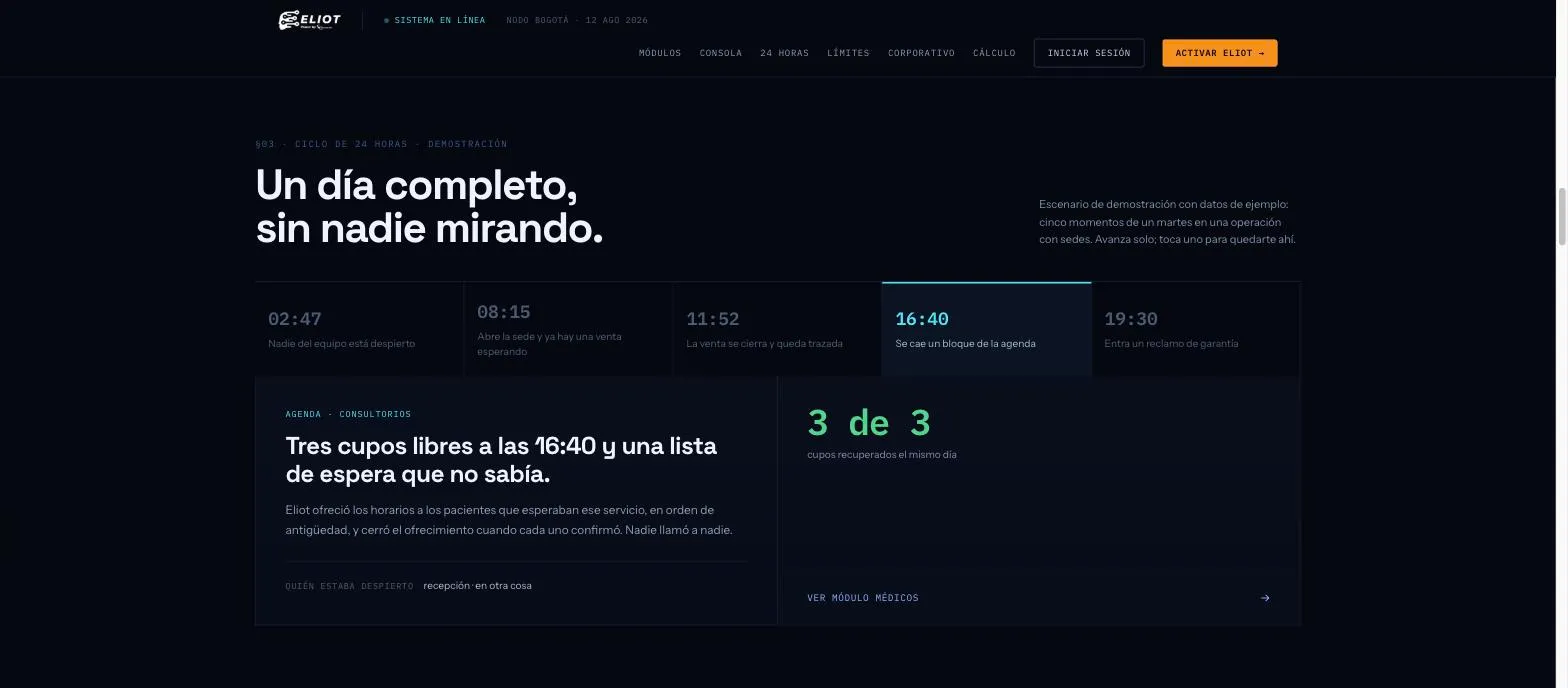
Eliot, the AI customer service layer, centralizes operations and automates day-to-day decisions with artificial intelligence. It is our own product: what we propose to you, we already run ourselves.
 See the solutions we have built →
Frequently asked questions
Do I need organized data to get started?
No. Part of the assessment is evaluating what data you have and what shape it is in. Many projects start with spreadsheets and emails.
Will AI replace my team?
We use it to remove repetitive tasks, not people: your team moves from data entry to supervising and handling what actually requires judgment.
What about the confidentiality of my data?
We sign a confidentiality agreement, comply with our personal data processing policy, and your data is not used to train third-party models.
How much does an AI project cost?
It depends on the process. That is why the first step is a free assessment: you get an estimate of the investment and the savings before you decide.
Can you work with us from another country?
Yes: remote teams with weekly deliveries and clients in 11 countries.
Which process hurts the most?
Let's start there. A 30-minute assessment, free of charge and with no commitment.