
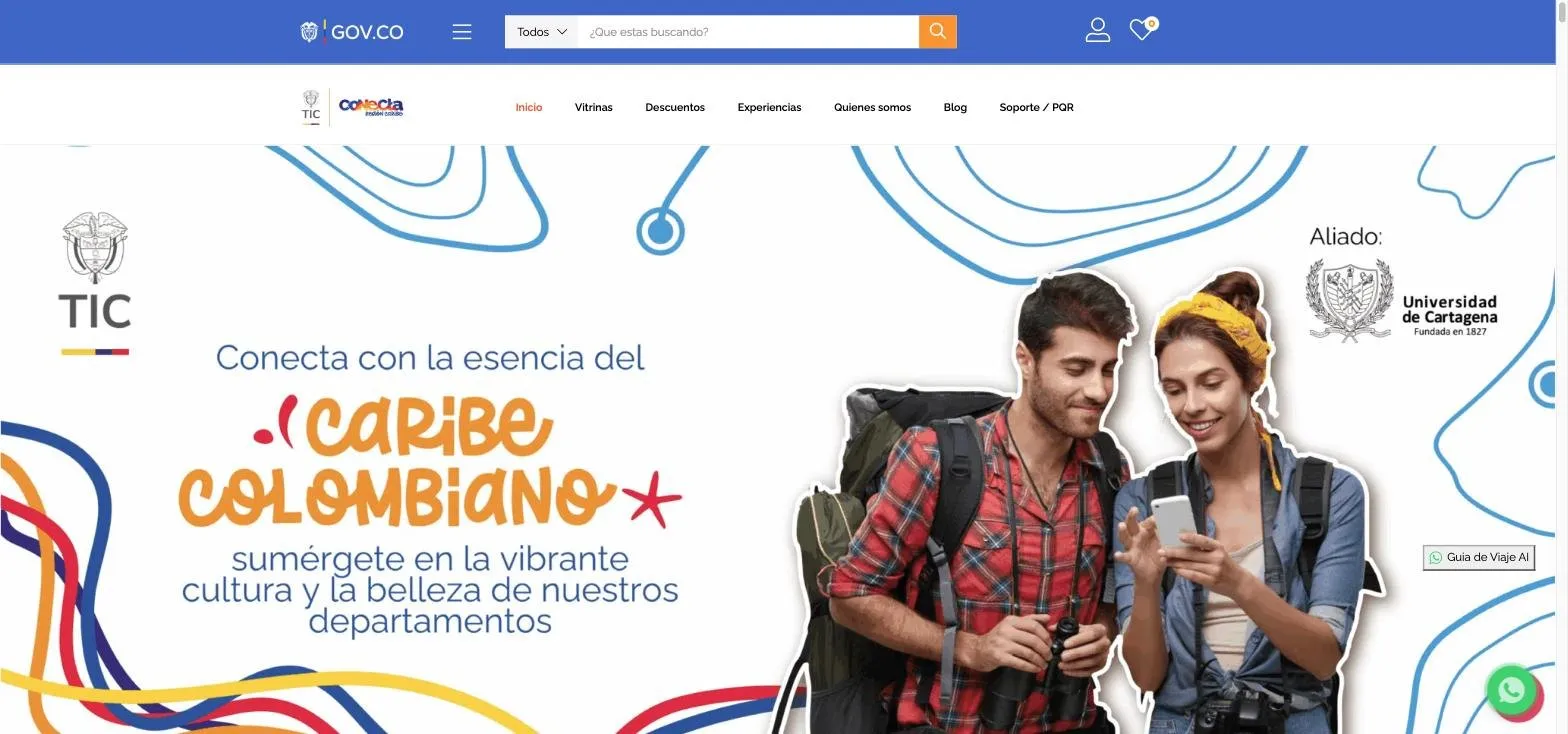
Project overview
Conecta Región Caribe is a project of Colombia’s Ministry of Information and Communications Technologies, carried out in partnership with Universidad de Cartagena, with two fronts: training the coast’s tourism service providers in digital skills and giving them a platform to sell on. Together with GreenTech Supply, we built the platform: the web marketplace and the mobile app that today bring together the tourism offer of seven departments.
It is not just another online store. It is an ecosystem of thousands of independent sellers, each with their own storefront, catalog, location and contact channel, on a category tree written for the Caribbean: Wayuu mochila bags, Mompox filigree, chiva rumbera, vallenato parties, trekking to Ciudad Perdida.
The challenge
A public platform at this scale has problems an ordinary ecommerce site does not:
Sellers start from zero. For many of these businesses this is their first presence on the internet. If publishing a storefront requires a computer, professional photos or ecommerce vocabulary, the catalog stays empty no matter how large the project’s budget.
Thousands of sellers, not one. Each one manages their own products, prices, hours and photos, and all of them share the same search, the same map and the same home page. The catalog has to organize itself, with no one curating it by hand.
Connectivity is uneven. The project reaches rural areas and communities with low digital adoption. Whatever works has to work on a mid-range phone on mobile data, not in an office on fiber.
And the deal is still human. On the coast, business is closed over WhatsApp. A platform that forces you through a cart and a payment gateway to book a boat loses to a direct message, so direct contact had to be part of the product, not its competition.
Goals
That a tourism provider can set up their storefront from a phone without help; that travelers find the coast’s offer in one place, organized by territory and category; that contact is closed directly between the two; and that the rural offer is as visible as that of the walled city.
The web platform, section by section
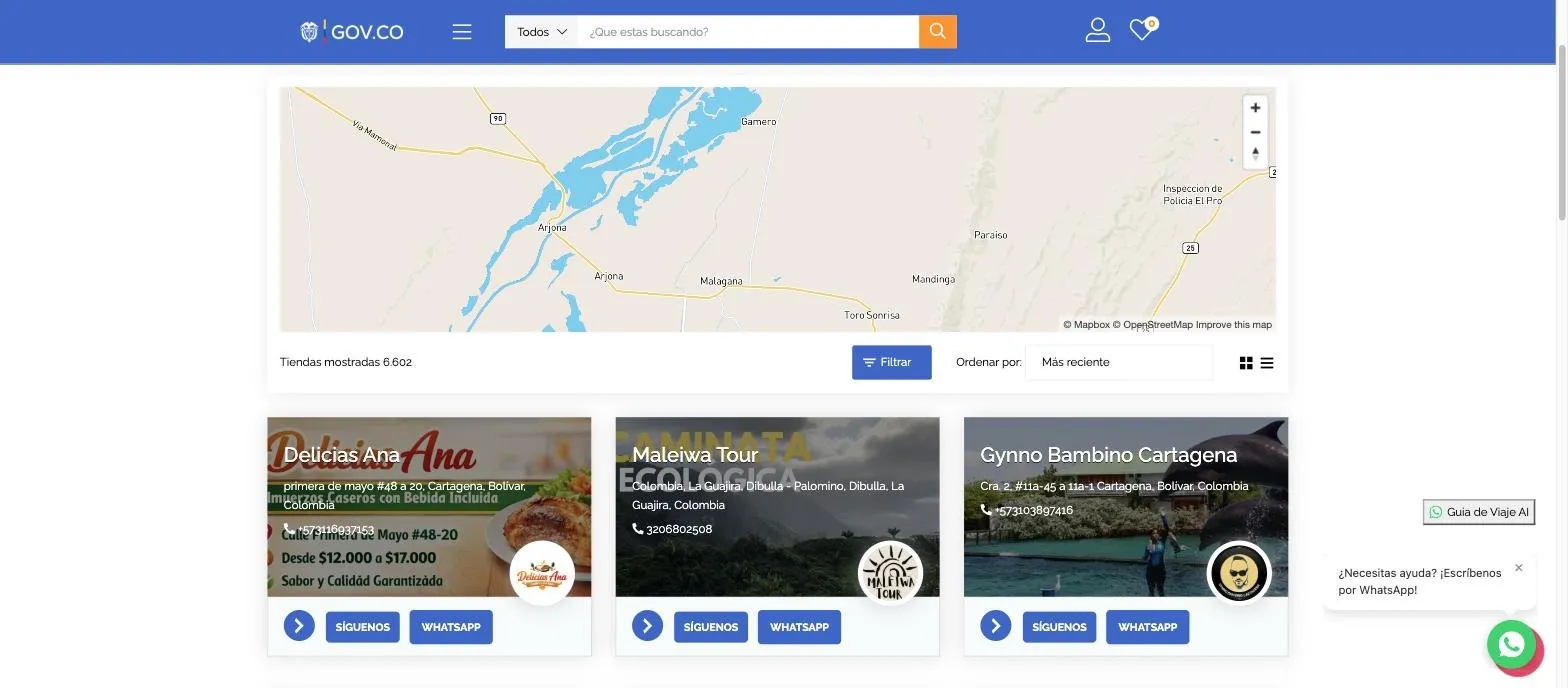
Thousands of storefronts, and a map to reach them
Every business has its own storefront: name, address, phone, catalog and a WhatsApp button. The directory filters by category and by proximity on the map, so a traveler in Riohacha does not see what is on offer in Cartagena. The page prints a live count of stores: on the day this screenshot was taken, 6,602.
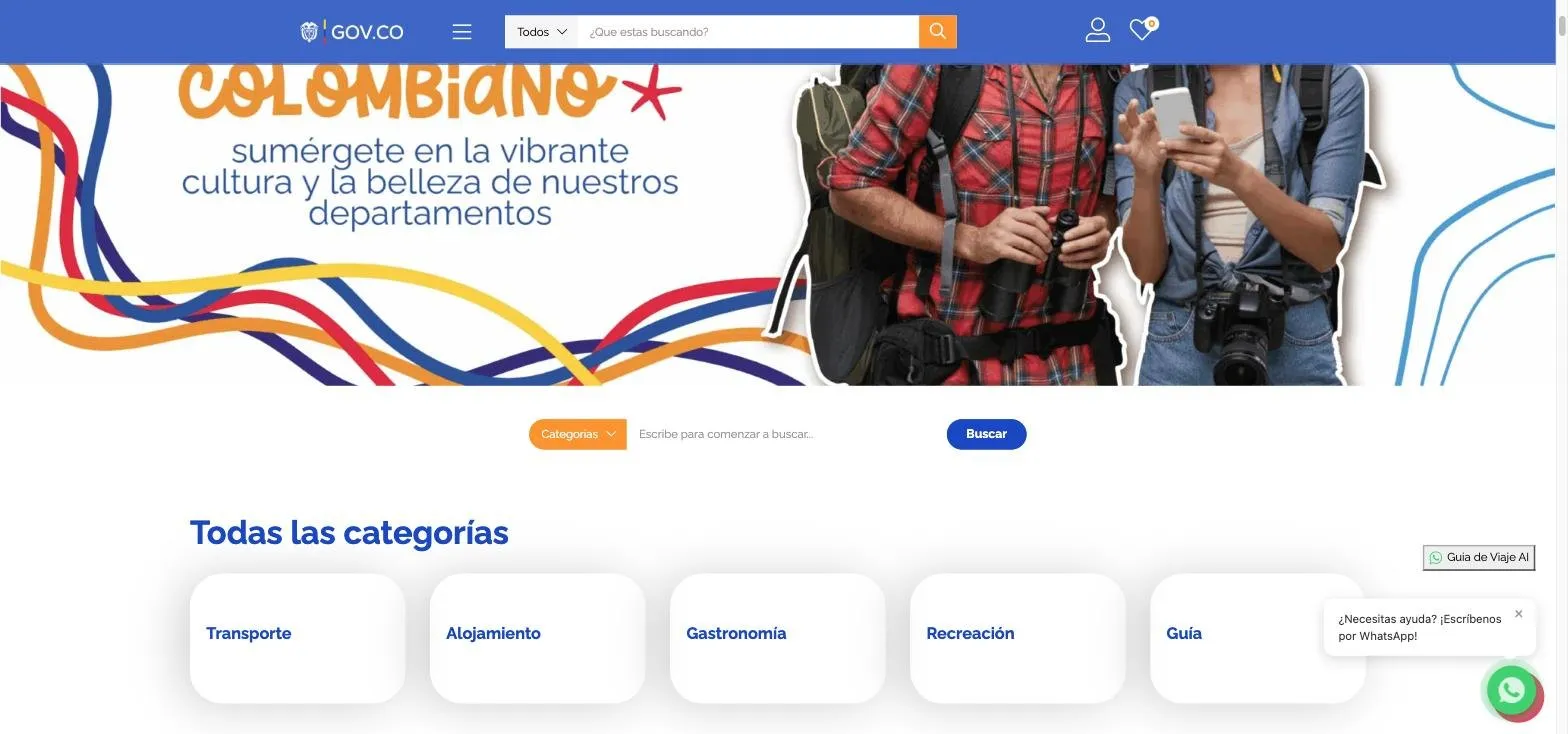
A category tree built for the Caribbean
This is not the generic catalog of an online store. It goes all the way down to the Wayuu mochila bag, Mompox filigree jewelry, the sombrero vueltiao, the chiva rumbera party bus or a night of live vallenato. That level of detail is what lets an artisan compete under their own name instead of inside a bin labeled “souvenirs”.
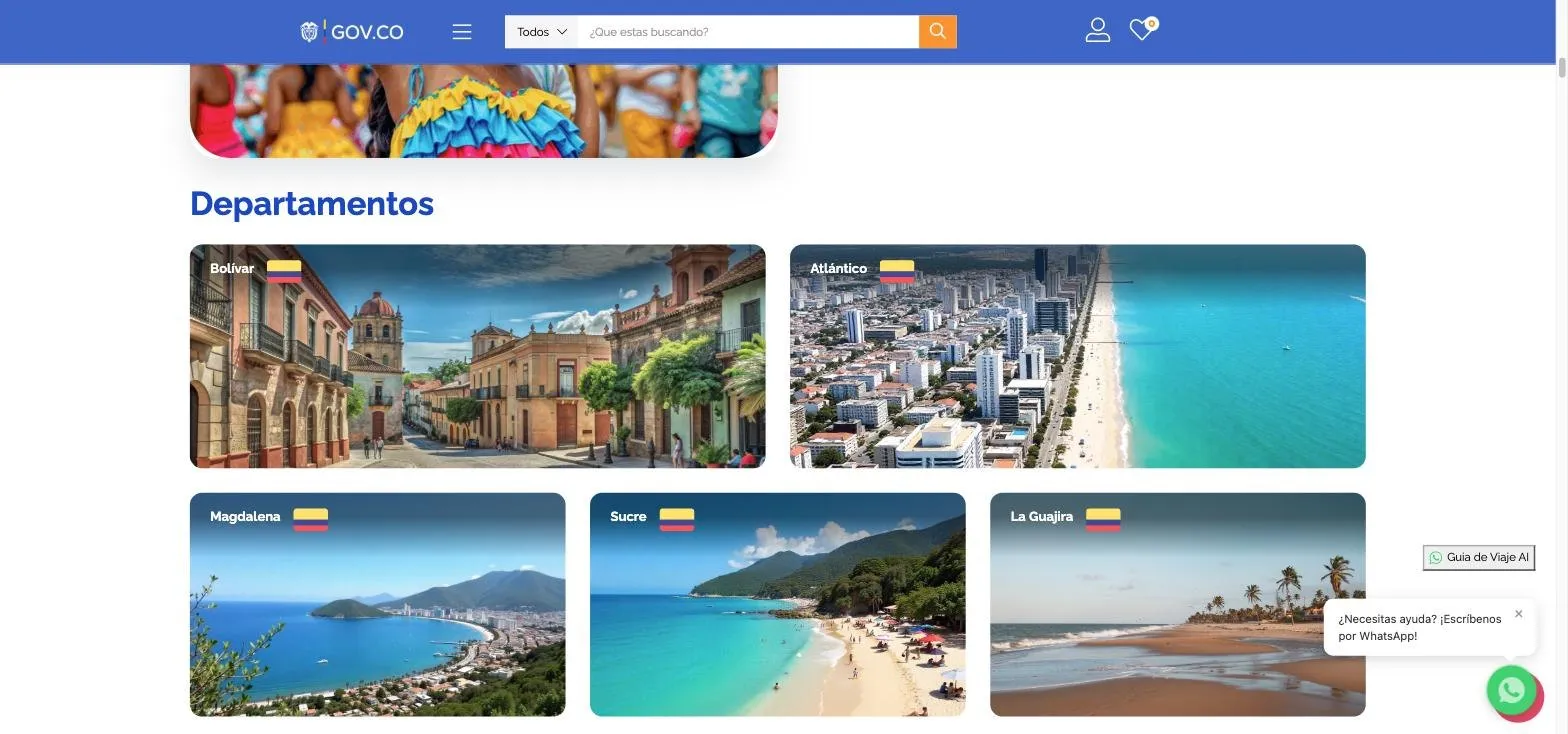
The offer is organized by territory
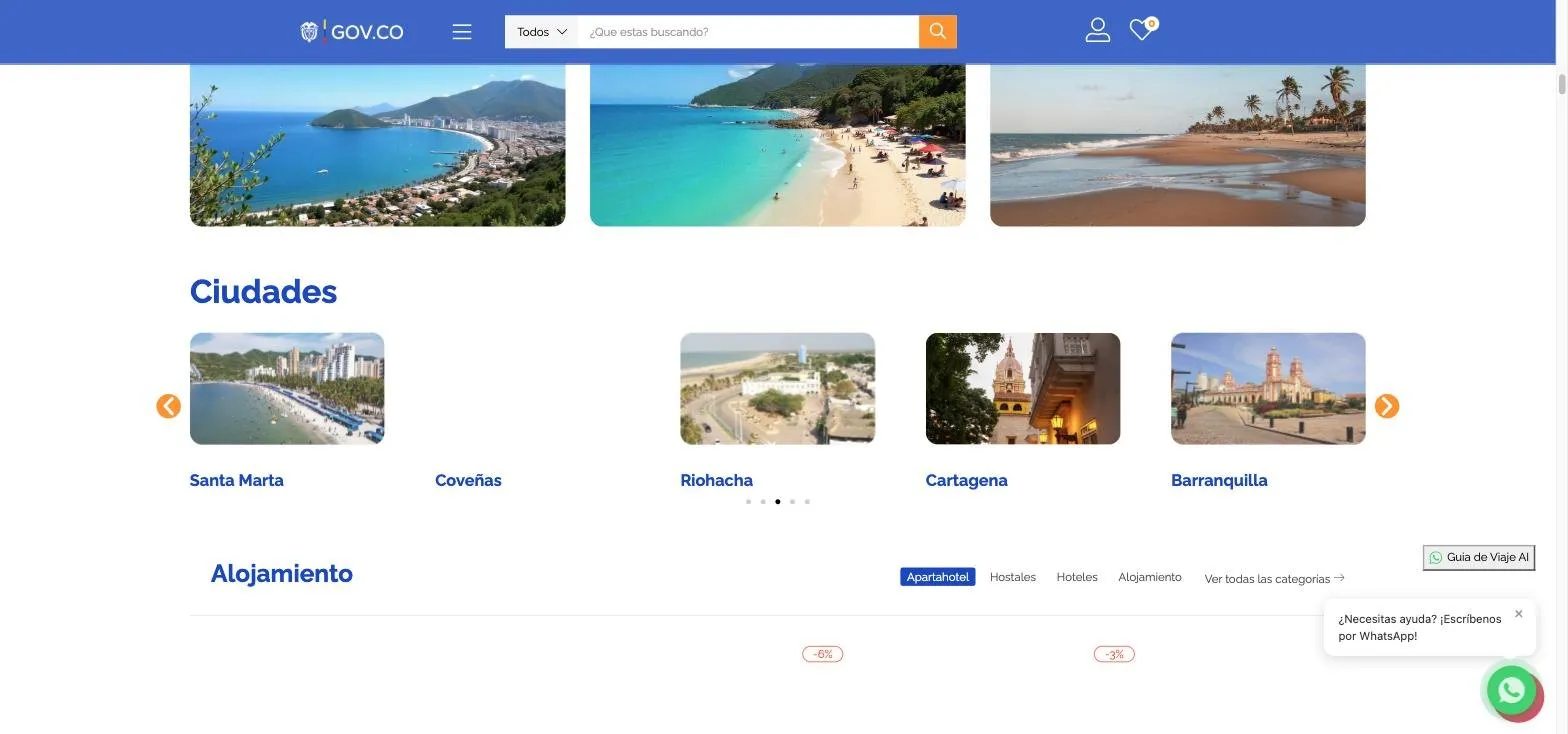
Tourists rarely search for a category: they search for a place. The home page leads with department and city before product, and each card opens the offer for that area. It is also what makes rural providers visible, who never show up in a general search engine.
Five cities as the gateway
Cartagena, Barranquilla, Santa Marta, Coveñas and Riohacha receive most of the visitors, so they are the first screen. From there the catalog opens up to the rest of the coast, including towns with no direct flights.
What it includes
The project in numbers
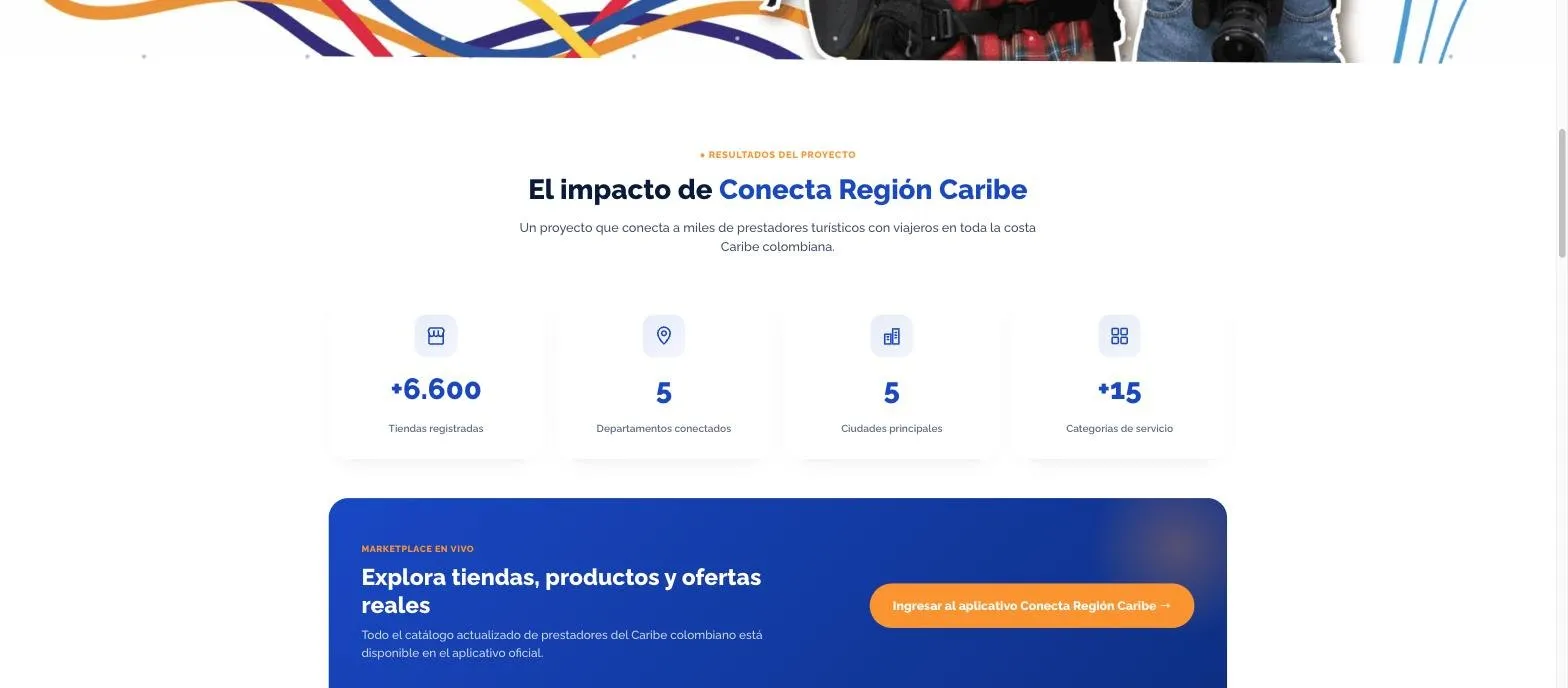
stores registered on the platform
departments benefiting from the program
tourism operators to be trained in digital skills
hours of training per operator
main service categories
main cities as the gateway
Figures published by Colombia’s Ministry of ICT at conectaregioncaribe.mintic.gov.co and on the platform’s goals and benefits pages. They are the program’s results, not a measurement of ours. The seven benefiting departments are La Guajira, Cesar, Magdalena, Atlántico, Bolívar, Sucre and Córdoba.
What actually sells on the platform
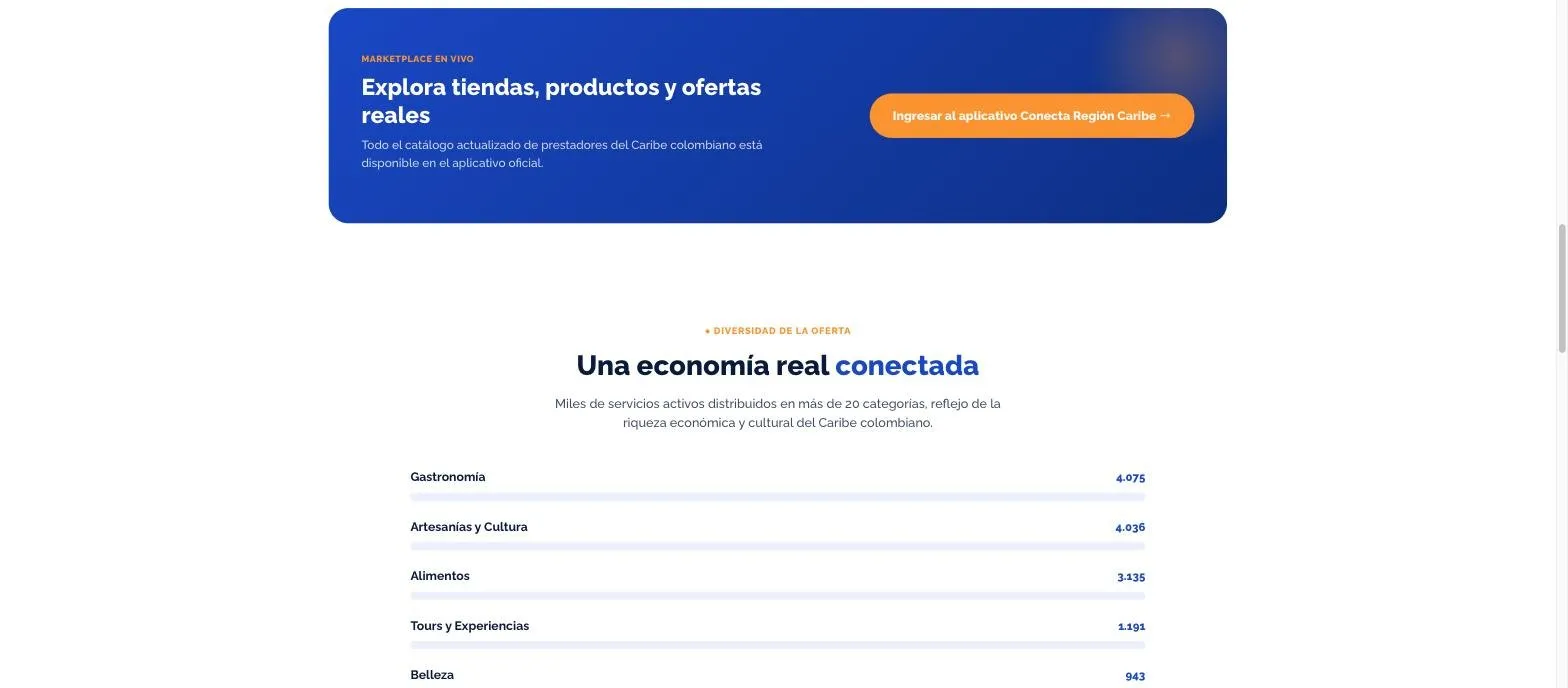
The catalog breakdown says more about the project than any mission statement: it is not dominated by hotels, but by food and crafts. It is the grassroots economy entering a digital channel.
Active services by category, according to the MinTIC impact page. The storefront directory also prints its own live count: on September 4, 2026 it showed 6,602 stores.
The app, screen by screen
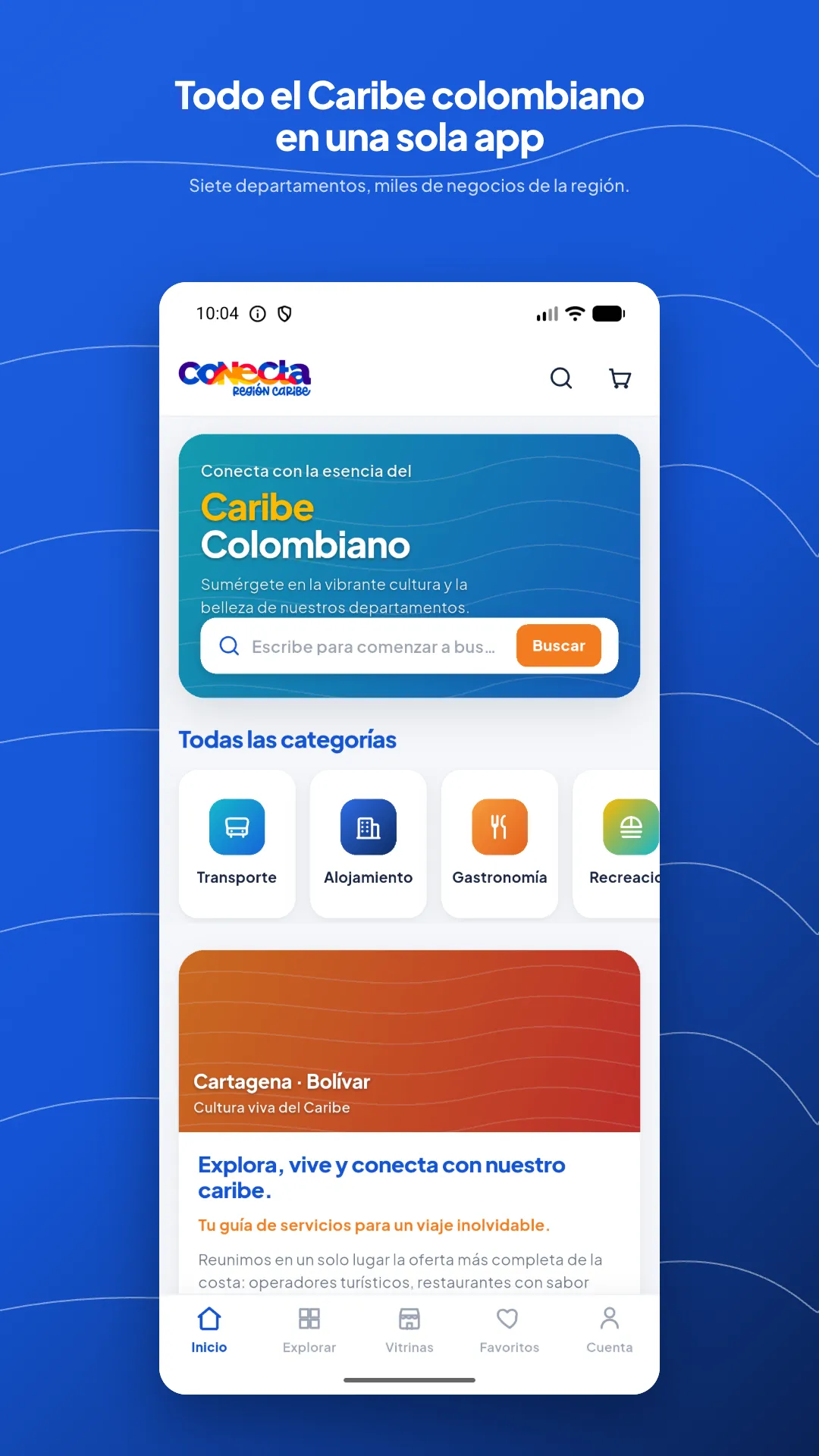
Published on Google Play, with the same catalog as the website and the logic of someone on a trip: search, explore, save and message.
The same offer, on the phone
The Android app carries the full catalog with a traveler’s logic: search, explore, save and message. It works without an account —favorites and lists are stored on the phone itself—, which is the difference between someone using it on the pier and giving up at the sign-up screen.
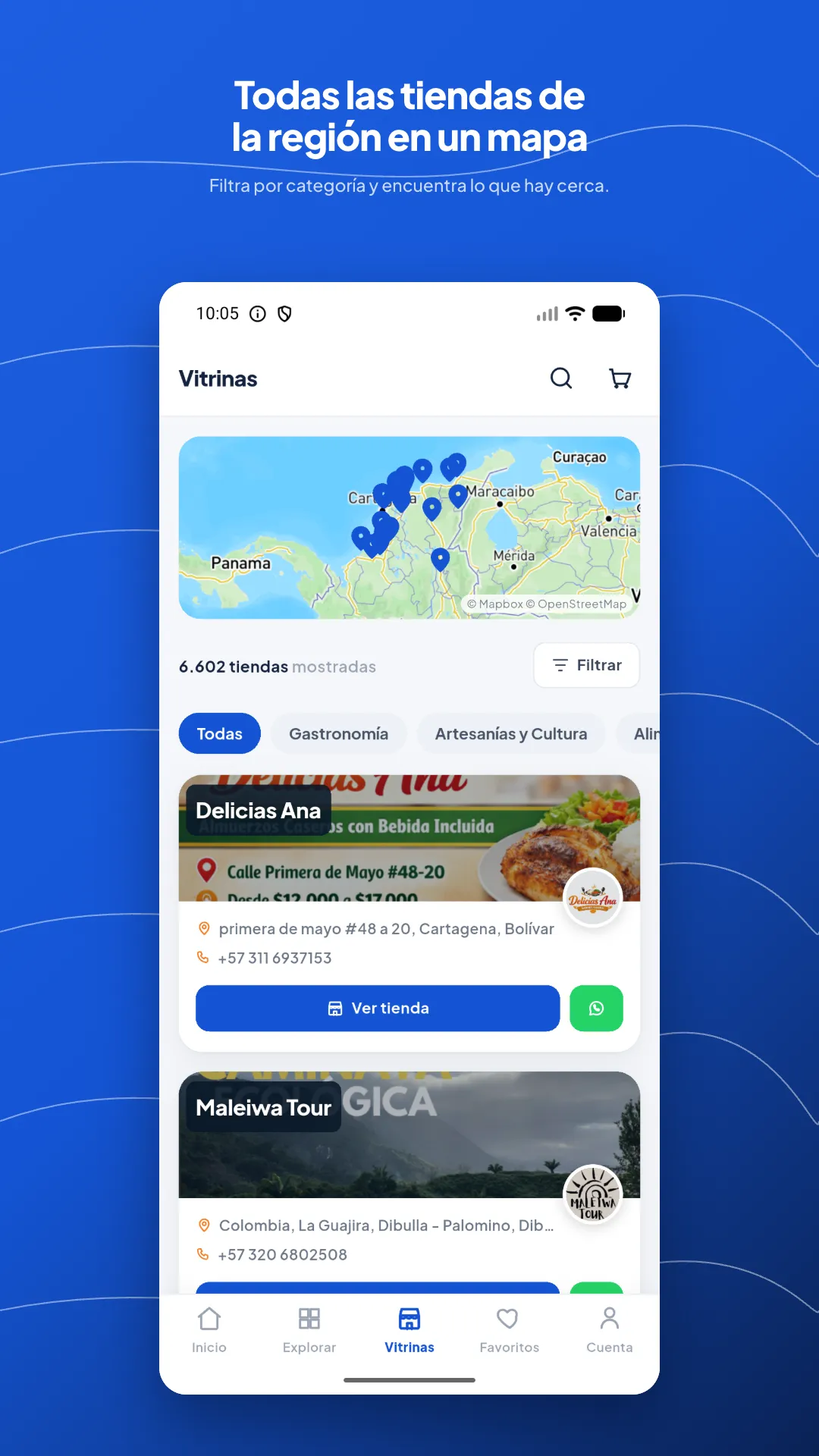
Every store in the region, on one map
Filter by category and see who is nearby. On a trip the question is rarely “what is there in the Caribbean”: it is “what is ten minutes from where I am”. The map answers that with the same database that powers the website.
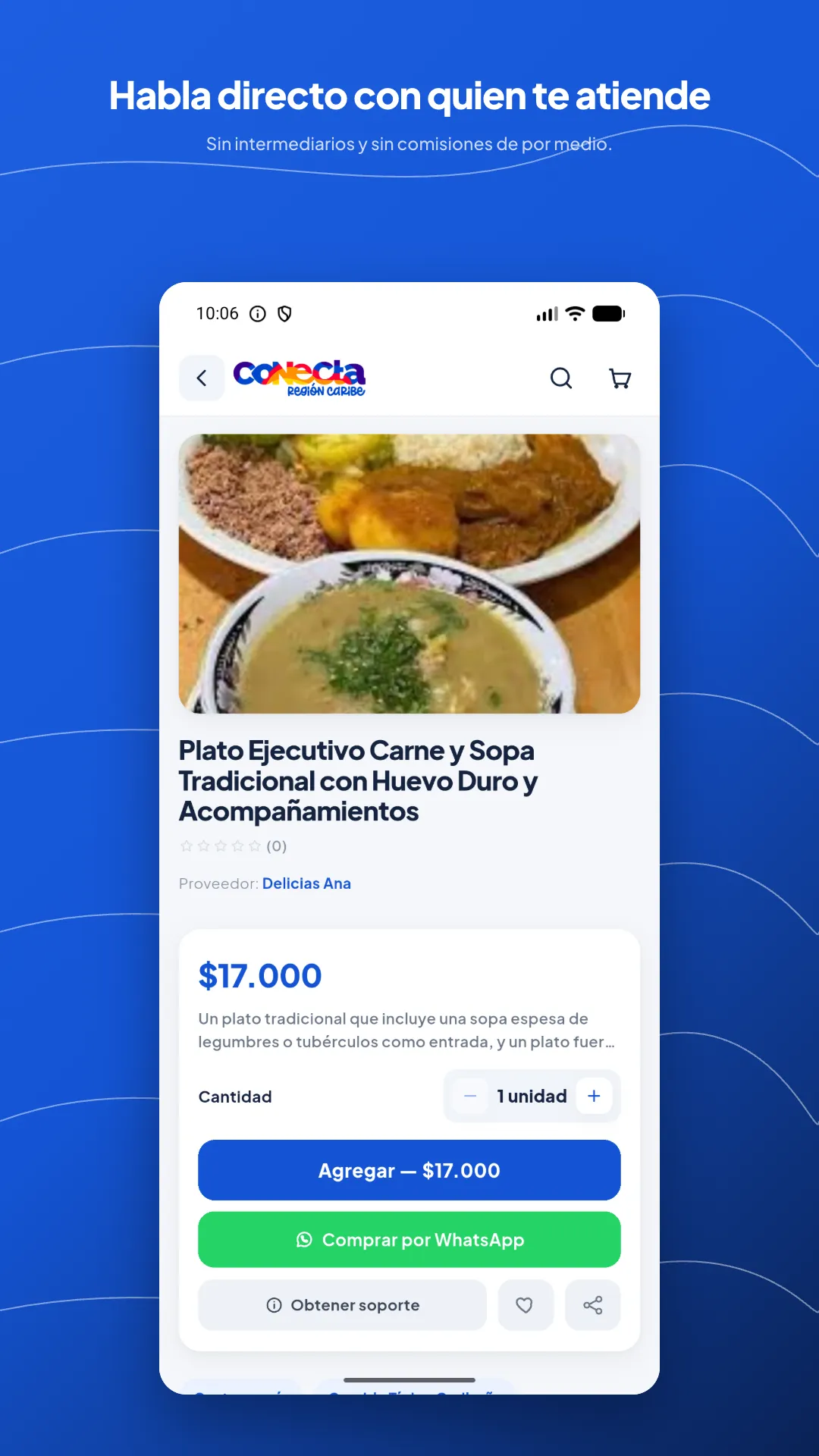
Direct contact, no commissions in between
The deal is closed between the traveler and the business over WhatsApp: the platform connects them and charges no brokerage fee. For a provider who sells by direct message today, it is the only way in without changing how they work, and it is the decision that drives adoption.
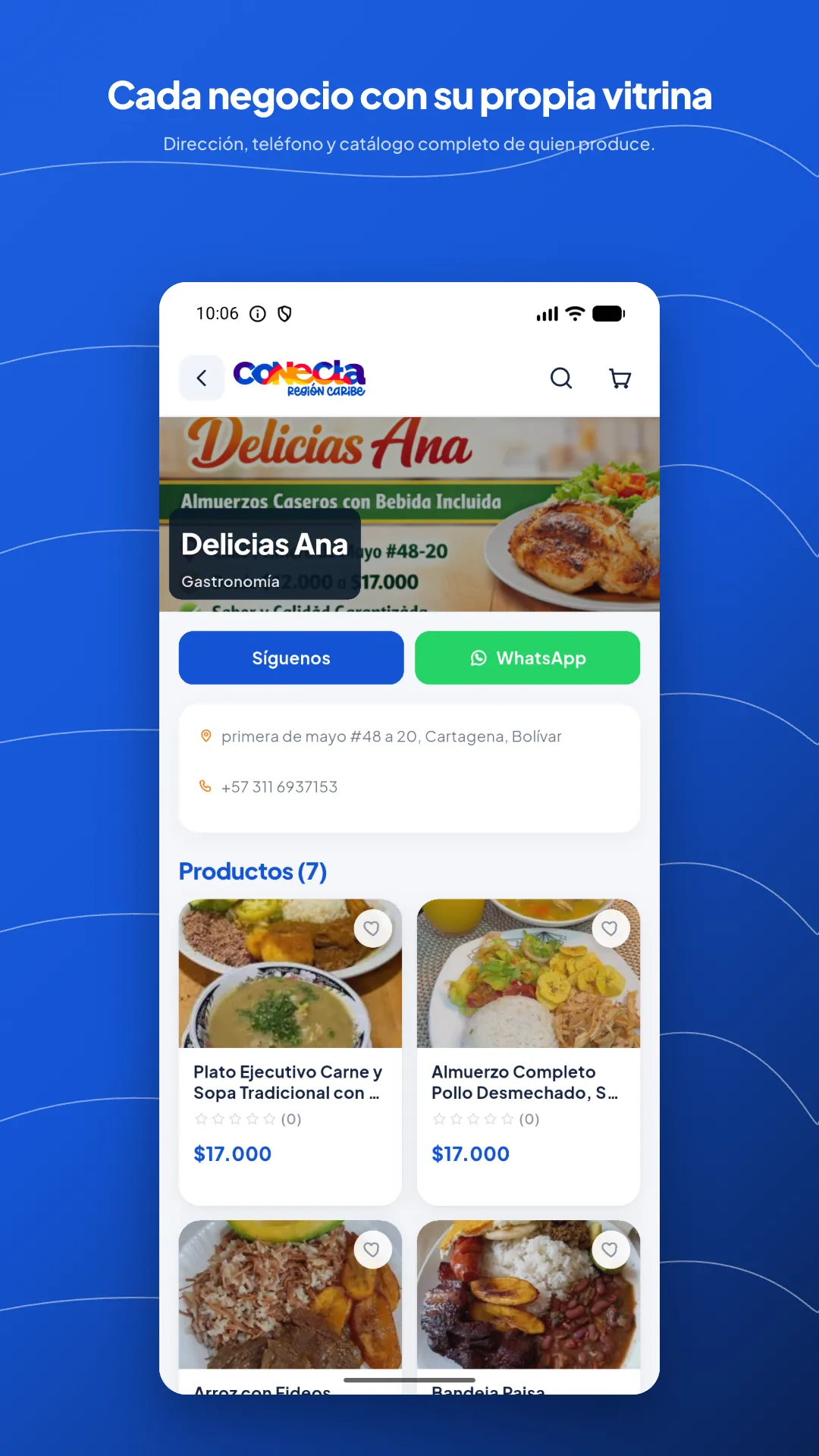
Every business, with its own storefront
Cover image, location, phone, social media and full catalog. For most of these businesses it is their first online presence, which is why the storefront is filled in from the phone, with no computer or design skills needed.
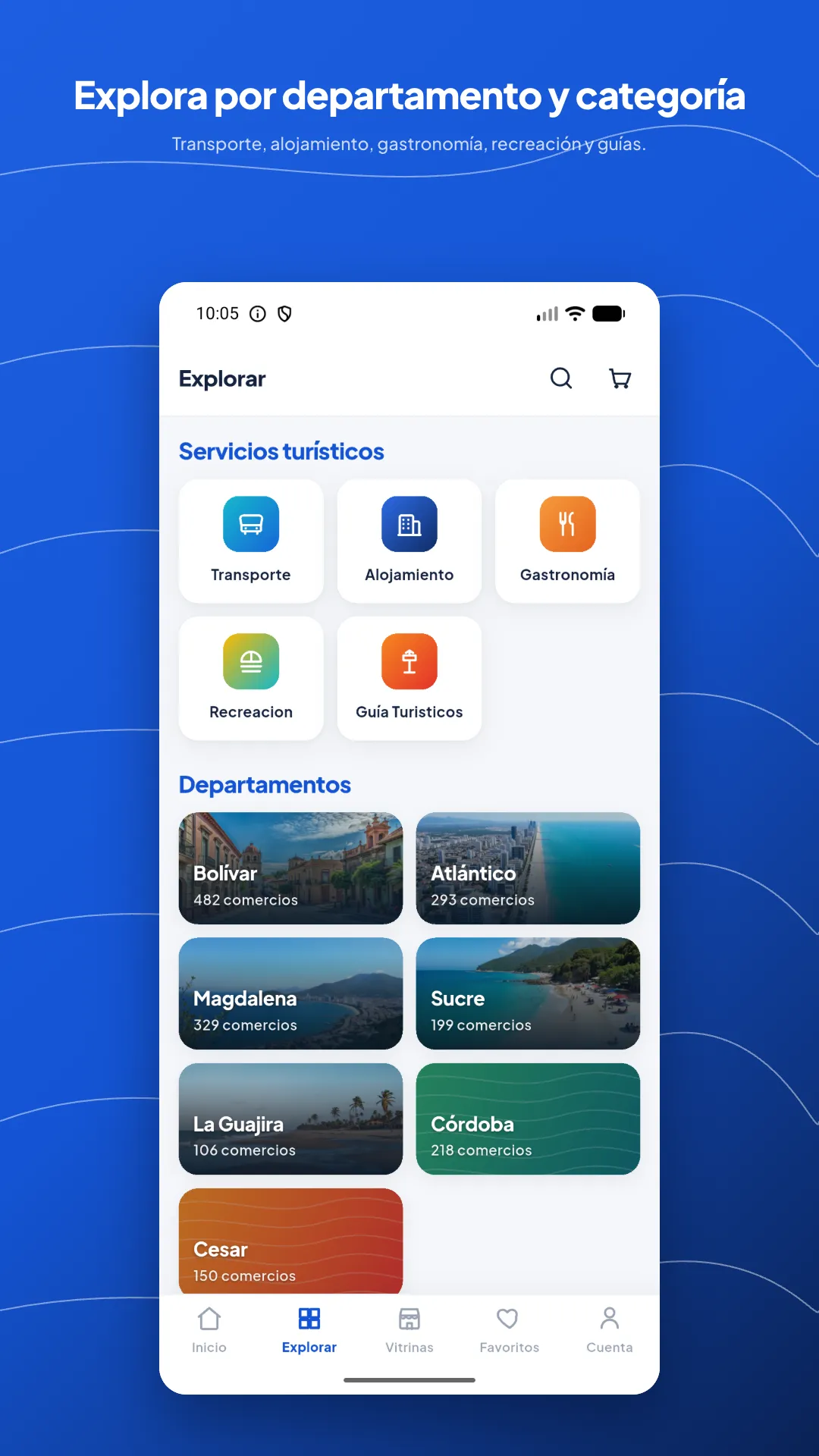
Explore by department
Each department shows how many businesses it has and opens straight to its offer. It is the shortcut for those who already know where they are going.
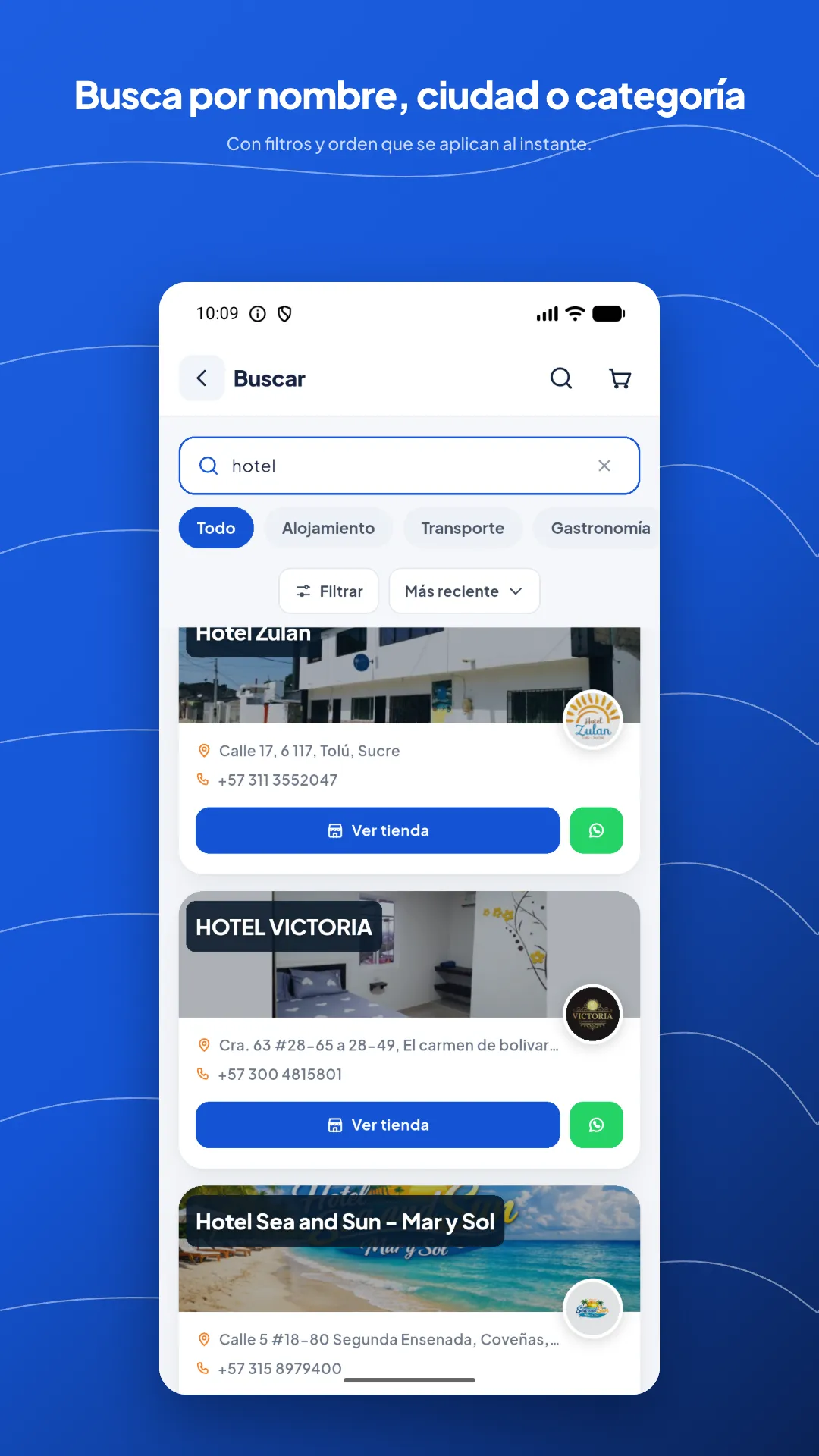
Search by name, city or category
With the filters in view and sorting applied instantly, without reloading the list or losing what was already typed.
Technologies used
Is your project next?
Tell us what you need to solve and we will show you a case like yours.
This project came out of our ecommerce development service. More on technology for tourism and hospitality and ecommerce marketplaces.